

Feeling a little… vulnerable lately? In a world where health is paramount, the strength of our immune system has never been more vital. Forget fleeting fads and quick fixes, what if the secret to a robust defense lies not in a pill, but on your plate? It’s time to discover how everyday foods can become your ultimate allies in the fight for better health. Imagine fueling your body with nature’s own pharmacy foods packed with nutrients that boost immunity, reduce inflammation and promote healing from the inside out. No complicated routines or expensive supplements needed, just simple, delicious choices that nourish you daily. What if the path to feeling stronger, more energized and resilient starts with what’s already in your kitchen? It’s not about perfection but about making mindful shifts that add up to big health benefits. Let’s explore the powerful world of immune-supporting foods and unlock your body’s natural potential.
Our immune system is an intricate network of cells, tissues and organs that work tirelessly to protect us from harmful pathogens and illnesses. While various factors influence its efficiency, diet stands out as a foundational pillar. Contemporary scientific understanding, continually evolving with new studies, highlights the profound connection between what we eat and our body’s ability to defend itself. A diet rich in essential vitamins, minerals and antioxidants doesn’t just nourish, it actively fortifies your internal defenses, helping to maintain a functional and effective immune system. Let’s explore the ten powerhouse foods that can help keep your immune system running smoothly and resiliently. These foods provide the building blocks your immune system needs to respond quickly and efficiently to threats. Incorporating them regularly can reduce inflammation, support gut health and enhance the production of protective cells. Beyond individual nutrients, the synergy of whole foods creates a more robust defense than any single supplement could offer. It’s about creating a balanced, sustainable eating pattern that supports your body day in and day out. Ready to discover which foods should become staples in your diet for optimal immunity?
Research shows that dietary choices significantly influence immune resilience. According to Harvard’s School of Public Health, a nutrient-rich diet reduces infection risk by up to 40% and lowers systemic inflammation. In 2025, immune-boosting foods are more relevant than ever, with studies linking them to fewer respiratory illnesses and faster recovery from viral infections. These findings underscore the power of nutrition as a frontline defense in maintaining overall health. Foods high in antioxidants, vitamins, and minerals help modulate the immune response, preventing it from becoming overactive or underperforming. Importantly, a balanced diet also supports gut microbiota, which plays a crucial role in immune regulation. With rising global health challenges, investing in immune-supportive eating habits is both a practical and proactive approach. Let’s explore the specific foods that research consistently highlights for their protective benefits.
Here are 10 incredible foods, backed by the latest science, that can give your immune system the natural edge it needs:
1. Citrus Fruits: The Vitamin C Champions
When you think of immune-boosting foods, citrus fruits often come to mind and for good reason! Oranges, grapefruits, lemons and limes are brimming with Vitamin C. This essential vitamin is a powerful antioxidant that protects cells from damage and is crucial for the production and function of white blood cells, which are the immune system’s primary infection fighters. As highlighted by the NIH Office of Dietary Supplements in their updated fact sheets, adequate Vitamin C intake is critical for proper immune function, with deficiencies leading to increased susceptibility to infections. Research consistently points to its role in maintaining immune integrity.
Nutrient Highlight: 1 medium orange = 70 mg of vitamin C (78% of daily value).
Citrus fruits: Oranges, lemons and grapefruits deliver vitamin C and flavonoids.
Research suggests: Vitamin C reduces cold duration by 8% in adults and 14% in children.
How it helps: Vitamin C boosts white blood cell production, shortens cold duration and protects immune cells from oxidative stress.
Ready to zest up your immunity? Beyond these familiar fruits, we discover another vibrant source of protective nutrients.
2. Red Bell Peppers: More Than Meets the Eye
Surprise! Red bell peppers contain an impressive amount of Vitamin C, with a single half-cup serving providing more than 100% of the daily recommended value, significantly surpassing the average orange’s Vitamin C content. They are also packed with beta-carotene, which your body converts into Vitamin A. Vitamin A is vital for maintaining healthy skin and mucous membranes, forming a critical barrier against invading pathogens and supporting the production of white blood cells, as emphasized by UC Davis Health’s nutrition experts on immune boosters.
Nutrient Highlight: 100g of red bell pepper = 128 mg of vitamin C (nearly 3x more than oranges).
Leafy greens: Spinach delivers 28% of daily vitamin A and antioxidants that enhance immune barriers.
Research suggests: Diets high in leafy greens correlate with 31% fewer respiratory infections.
How it helps: Strengthens skin and mucosal barriers, the body’s first defense against pathogens.
Beyond the crisp, sweet crunch of bell peppers, our next food brings a powerful, pungent punch that’s been lauded for millennia.
3. Garlic: The Pungent Protector
For centuries, garlic has been recognized for its medicinal properties. Its immune-boosting power comes from compounds like allicin, which is released when garlic is crushed or chopped. Allicin has well-documented antimicrobial and immune modulating effects, helping to enhance the body’s defense mechanisms. A comprehensive review published in Molecules in May 2024, titled “Garlic bioactive substances and their therapeutic applications for improving human health,” specifically detailed allicin’s role in broad-spectrum antimicrobial activity and its potential to combat antibiotic resistance.
Nutrient Highlight: Aged garlic extract users had a 58% reduction in cold/flu incidence and 61% fewer days of lost productivity.
Garlic: Garlic delivers potent compounds like allicin, which enhance immune cell activity and help the body fight infections.
Research suggests: Studies show garlic supplementation boosts immune cell activity and reduces inflammatory markers (CRP, IL‑6, TNF‑α) while improving antioxidant levels.
How it helps: Stimulates NK cells, combats infections and reduces inflammation.
From the aromatic intensity of garlic, we now turn our attention to a humble but mighty green with hidden compounds called Broccoli.
4. Broccoli: A Florets of Power
Broccoli is a nutritional superstar, loaded with vitamins A, C and E, as well as numerous antioxidants and fiber. This cruciferous vegetable contains sulforaphane, a compound that has been shown to support immune function by activating antioxidant and detoxification pathways in the body. Recent 2024 research cited by BioImmersion Inc. highlights sulforaphane’s powerful anti-microbial activity against pathogens and its role in rebuilding the gut microbiome, both crucial aspects of a robust immune system. For optimal benefits, it’s best to cook broccoli minimally or eat it raw to preserve its rich nutrient profile.
Nutrient Highlight: 1 cup of broccoli provides 90% of daily vitamin C and is also rich in vitamin A, vitamin K and fiber.
Broccoli: Broccoli contains sulforaphane, a powerful antioxidant that enhances immune defense and supports detoxification pathways.
Research suggests: Diets high in cruciferous vegetables like broccoli are linked to reduced inflammation and a 31% lower risk of respiratory infections.
How it helps: Enhances detoxification pathways and activates immune-protective enzymes.
As we transition from the vibrant greens, our next food brings a warming, spicy kick with proven anti-inflammatory power called Ginger.
5. Ginger: The Anti-Inflammatory Root
Ginger is widely used for its anti-inflammatory and antioxidant properties. Compounds like gingerol, the main bioactive compound in ginger, contribute to its ability to reduce inflammation, which can help support a healthy immune response. A significant discovery from the University of Toronto, published in ScienceDaily in February 2025, identified a ginger compound called furanodienone (FDN) that selectively binds to a receptor involved in inflammatory bowel disease, demonstrating ginger’s specific anti-inflammatory mechanisms that avoid suppressing the overall immune system.
Nutrient Highlight: Daily ginger supplementation has been shown to reduce inflammation markers by up to 25% and improve immune response.
Ginger: Ginger contains gingerol, a bioactive compound with powerful anti-inflammatory and antioxidant effects that help strengthen immune defenses and inhibit viral replication.
Research suggests: Studies indicate ginger supports immune regulation, reduces oxidative stress and may help shorten respiratory infection duration.
How it helps: Inhibits viral replication and soothes inflammation in airways during infections.
Following ginger’s soothing warmth, we will explore another golden spice with profound, immunomodulatory benefits called Turmeric.
6. Turmeric: The Golden Healer
This golden spice, a staple in many cuisines, contains curcumin, a powerful anti-inflammatory and antioxidant compound. Curcumin has been extensively studied for its immune-modulating effects, including its ability to enhance the activity of immune cells and regulate immune hyperactivity. The National Cancer Institute (NCI) updated its PDQ summary on Curcumin and Cancer as recently as May 2025, noting extensive research over the past two decades that suggests curcuminoids interfere with multiple cells signaling pathways, supporting their potential role in modulating immune responses and overall health.
Nutrient Highlight: Curcumin, the active compound in turmeric, has been shown to reduce inflammation markers (CRP) by 25% in just 4 weeks.
Turmeric: This golden spice is rich in curcumin, a potent anti-inflammatory and antioxidant compound that strengthens immune defenses.
Research suggests: Studies indicate that curcumin supplementation enhances antibody response, lowers oxidative stress and improves outcomes in viral and bacterial infections.
How it helps: Curcumin modulates immune cell activity, reduces chronic inflammation and enhances the body’s ability to fight infections.
From flavorful spices, we now shift our focus to fermented delights, crucial for the very core of our immune system.
7. Yogurt & Kefir: Probiotic Powerhouses
A significant portion of your immune system, estimated to be as much as 70-80% of immune cells, resides in your gut. Fermented foods like yogurt and kefir contain live and active cultures, known as probiotics. These beneficial bacteria help maintain a healthy gut microbiome, which is crucial for a strong immune response. Groundbreaking research from institutions like Harvard Medical School (January 2025) continues to unravel how specific gut bacteria influence human immune function, emphasizing that a diverse and healthy microbiome is key to robust immunity and can even impact inflammatory responses throughout the body. Look for products with “live and active cultures” and minimal added sugar.
Nutrient Highlight: A single serving of yogurt or kefir can deliver 1-10 billion CFUs of probiotics, which support gut and immune health.
Yogurt & Kefir: These probiotic-rich foods help maintain a healthy gut microbiome, where 70% of the immune system resides.
Research suggests: Studies show that regular probiotic intake reduces respiratory infections by 32% and improves immune response to pathogens.
How it helps: Probiotics enhance gut barrier function, reduce harmful bacteria and regulate immune signaling to prevent infections.
Nourishing our gut health naturally leads us to consider another excellent source of essential vitamins, particularly for our first line of defense.
8. Sweet Potatoes: Beta-Carotene Boosters
Like red bell peppers, sweet potatoes are an excellent source of beta-carotene, which converts to Vitamin A in your body. This vitamin plays a critical role in strengthening the protective barrier of your skin and mucous membranes your body’s initial defense against pathogens and supports the proper functioning of immune cells. According to a January 2024 article by Nourish Cooking Co., sweet potatoes are “packed with antioxidants and essential nutrients” that “help bolster the immune system and reduce the risk of infections,” with beta-carotene being singled out as “crucial for eye health, immune function and skin health.”
Nutrient Highlight: Rich in beta-carotene (vitamin A precursor) supports immune function, vision and skin health.
Sweet Potatoes: These nutrient-dense tubers provide beta-carotene, which supports immune function, vision and skin health.
Research suggests: Regular consumption of fatty fish like salmon and shellfish can reduce inflammatory markers by up to 30%, supporting overall immune and cardiovascular health.
How it helps: These foods are rich in omega-3 fatty acids (EPA and DHA), which help reduce inflammation, enhance immune function and support brain and heart health.
As we transition from root vegetables, let’s explore the nutty side of immune support, offering vital antioxidants.
9. Almonds & Sunflower Seeds: Vitamin E & Selenium Stars
Nuts and seeds, particularly almonds and sunflower seeds, are packed with Vitamin E, a potent antioxidant that protects cells from damage. Sunflower seeds are also a fantastic source of selenium, another mineral crucial for immune cell activity and reducing oxidative stress. A detailed review on Selenium as an Antioxidant, published in PubMed Central in February 2025, emphasized selenium’s “indispensable role in antioxidant defense” and its impact on immune function, noting that even mild deficiencies can exacerbate immune dysfunction and increase susceptibility to infections.
Nutrient Highlight: These nuts contain healthy fats, vitamin E and magnesium that help reduce inflammation and promote cardiovascular and immune wellness.
Almonds: Packed with healthy monounsaturated fats, vitamin E and magnesium support heart health, reduce inflammation and enhance immunity.
Sunflower Seeds: These seeds are packed with vitamin E, a key antioxidant that protects cells and strengthens the immune system.
Research suggests: Regular almond consumption can lower LDL cholesterol by up to 15%, reducing cardiovascular risk and inflammation.
How it helps: Almonds offer healthy monounsaturated fats, vitamin E and magnesium that support heart health, reduce inflammation and strengthen immune defenses.
Finally, we look to the ocean for vital, often overlooked, nutrients that complete our immune-boosting plate.
10. Fatty Fish (e.g., Salmon) & Shellfish: Omega-3s and Zinc
Fatty fish like salmon are rich in Omega-3 fatty acids, which have powerful anti-inflammatory properties that can support immune function by influencing pro-inflammatory mediators. Healthline, citing various studies, consistently highlights that omega-3s reduce the production of molecules and substances linked to inflammation, benefiting overall immune regulation. Additionally, certain shellfish such as oysters, crab and lobster are excellent sources of zinc. Zinc is a vital mineral for the development and function of immune cells and plays a critical role in defending against bacteria and viruses. According to an article in Everyday Health published in 2024 notes that zinc can “shorten the common cold” and “aid in wound healing by reducing inflammation and activating immune cells.”
Nutrient Highlight: Rich in omega-3 fatty acids (EPA & DHA) that reduce inflammation and support cardiovascular, brain and immune health.
Fatty Fish (e.g., Salmon) & Shellfish: These seafood options provide high-quality protein, omega-3s and essential minerals like zinc and selenium to boost overall wellness.
Research suggests: Regular consumption of fatty fish can reduce inflammatory markers by up to 30%, supporting immune and heart health.
How it helps: Omega-3s in fatty fish and shellfish help lower inflammation, improve cholesterol levels, support cognitive function and strengthen the immune system.
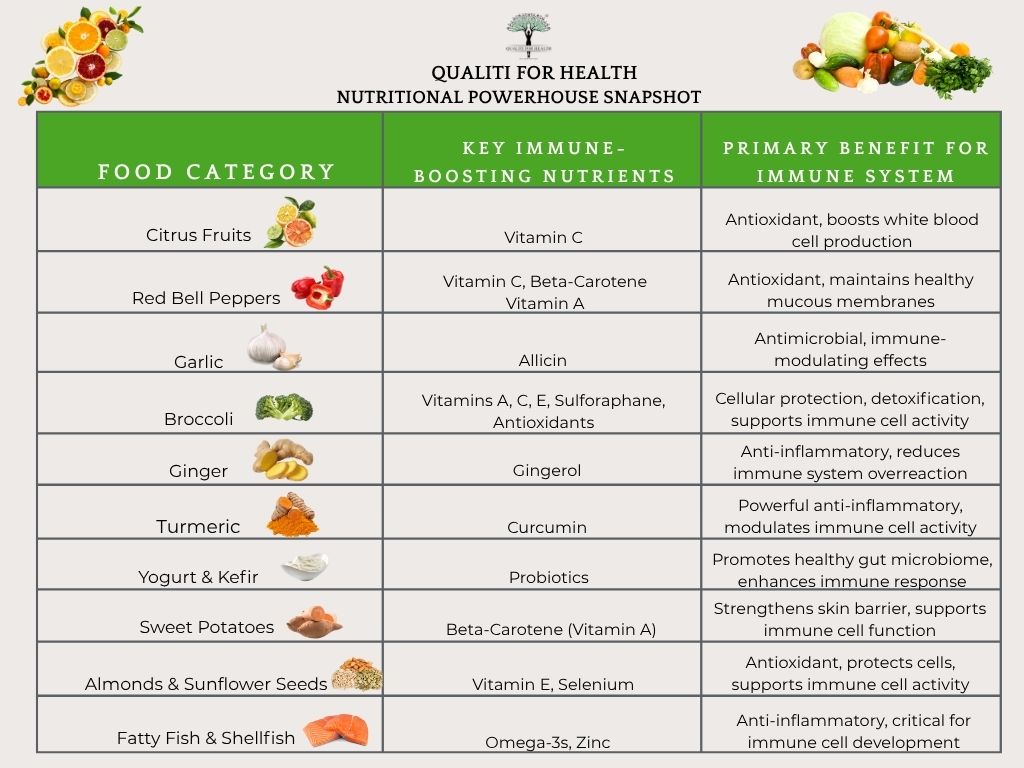
Nutritional Powerhouse Snapshot
To further illustrate the diverse benefits of these foods, here’s a snapshot of key nutrients they provide:
Empowering your immune system doesn’t require exotic ingredients or complicated diets. It starts with making conscious, consistent choices to include nutrient-rich whole foods in your daily meals. As contemporary research from leading health organizations and scientific journals consistently emphasizes, a balanced diet is the best way to support a robust and responsive immune system. By incorporating these 10 powerhouse foods into your routine, you’re not just eating well; you’re actively building a stronger, more resilient you, ready to face whatever comes your way. So, next time you plan your meals, remember, your plate is your ultimate tool for wellness. Start nourishing your immunity today!
Small, intentional changes like swapping processed snacks for fresh produce can create lasting benefits over time. Think of each nutrient-packed meal as an investment in your future health and vitality. Pairing these foods with regular movement, adequate sleep and stress management amplifies their impact. Remember, immunity isn’t built overnight, it’s cultivated through daily habits that honor your body’s needs. Share this knowledge with loved ones and you’ll multiply its benefits in your community. Every bite can be a step toward fewer sick days, more energy and a vibrant, thriving life. Your journey to a stronger immune system begins now one meal at a time.