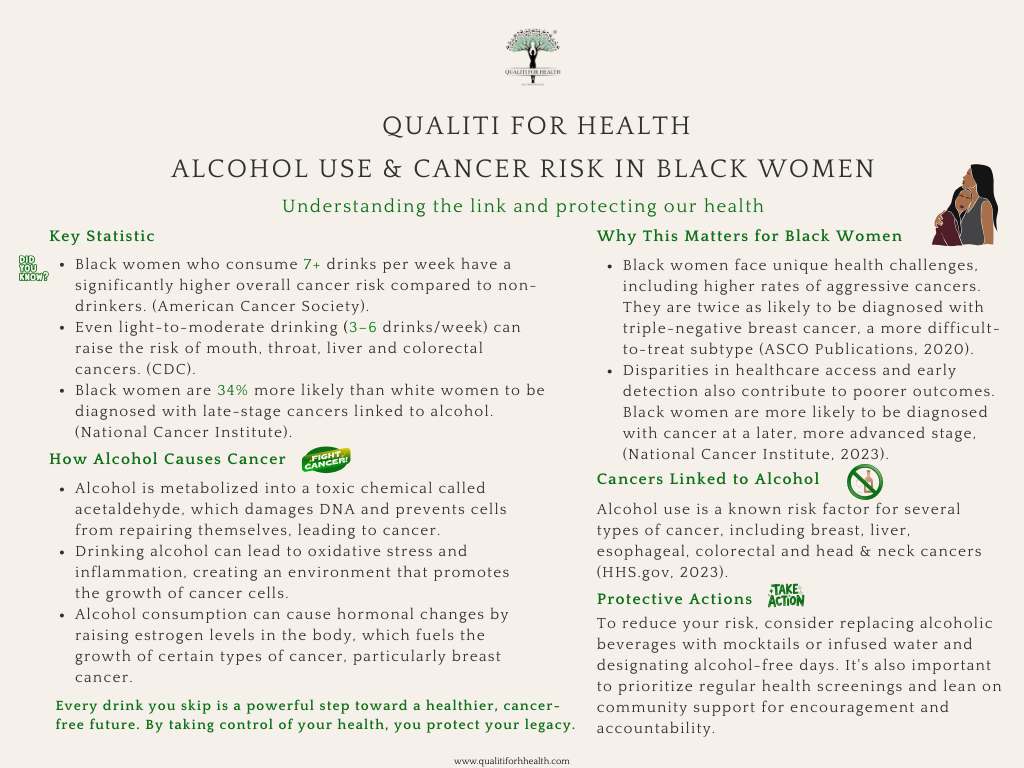
For many Black women, the link between alcohol and cancer is a silent threat, one rarely discussed in everyday health conversations. Picture this: it’s Friday night, and after a long week, you pour a glass of wine with friends, thinking it’s harmless. But that glass holds something far more dangerous than it appears a substance placed in the same cancer causing category as tobacco and asbestos. According to the International Agency for Research on Cancer, alcohol is classified as a Group 1 carcinogen, meaning there is clear and undeniable evidence of its role in causing cancer.
Alcohol is not just a casual indulgence. Research shows it is linked to at least seven types of cancer: breast, colorectal, liver, mouth, throat, esophagus and larynx. For Black women, the stakes are even higher. Alcohol-related cancer risks do not exist in isolation; they collide with systemic health inequities, cultural norms and even targeted marketing from the alcohol industry. This dangerous combination means that even “moderate” drinking can carry life-altering consequences. That’s why awareness is more than important, it’s urgent. By shining a light on this hidden connection, Black women can be empowered to make informed choices, protect their health and spark a larger conversation about prevention, equity and community well-being.
The Established Link Between Alcohol and Cancer
The connection between alcohol and cancer is no longer a matter of debate, it is a well documented and urgent public health issue. According to the World Health Organization, alcohol is responsible for more than 5% of all new cancer cases worldwide each year. In the United States alone, the Centers for Disease Control and Prevention report that alcohol contributes to more than 75,000 cancer cases and nearly 19,000 cancer deaths every year. This means that thousands of lives could be saved annually if alcohol-related risks were reduced.
Research shows that no level of alcohol use is completely safe when it comes to cancer. Even one drink a day increases the risk of breast cancer in women by up to 10%. For women who drink more heavily, the risks rise sharply consuming three drinks per day increases breast cancer risk by 40-50%. These dangers are not limited to breast cancer, alcohol is also tied to cancers of the colon, rectum, liver, mouth, throat, esophagus and larynx. Together, these alcohol-related cancers represent a significant portion of preventable cancers and yet many women remain unaware of the link.
For Black women, the stakes are especially high. Alcohol-related cancer risks do not exist in isolation, they intersect with systemic inequities and existing health challenges. For example, alcohol contributes significantly to liver cancer, a cancer where Black women are 30% more likely to die than white women. Studies suggest that Black women may also develop certain alcohol-related cancers at lower levels of consumption compared to white women, meaning that even “light” drinking can be disproportionately harmful.
Yet the connection between alcohol and cancer remains under recognized in many communities. According to public health experts, awareness campaigns around smoking and lung cancer have been widespread for decades, but alcohol’s link to cancer has not been communicated with the same urgency. This lack of visibility leaves women especially Black women without the knowledge needed to make fully informed decisions about alcohol use. These numbers are not just statistics they are a call to action. By knowing the truth about alcohol and cancer, Black women can be better equipped to take control of their health, reduce their personal risk and advocate for broader systemic changes that prioritize prevention and health equity.
Systemic Barriers and Social Pressures
For Black women, the risks of alcohol-related cancers are not solely influenced by personal choices but are deeply intertwined with systemic inequities and cultural dynamics. Research indicates that Black women are disproportionately exposed to alcohol advertising, which normalizes drinking and can influence consumption patterns. A study by the Center on Alcohol Marketing and Youth found that African American youth aged 12 to 20 were exposed to more alcohol advertisements in magazines and on television compared to their peers, with African American youth seeing 22% more beer ads, 38% more distilled spirits ads and 92% more alcopop ads than all youth combined.
Cultural norms also play a significant role. In many Black communities, alcohol is often present in social gatherings and celebrations, which can make it challenging to reduce consumption. This normalization of drinking, coupled with the stressors of daily life, may lead to increased alcohol use as a coping mechanism. Studies suggest that Black women may experience higher levels of stress due to systemic racism, gender discrimination and socioeconomic disparities, creating conditions that can increase alcohol use as a coping mechanism.
Healthcare access is another critical factor. Black women are less likely to receive timely screenings, accurate diagnoses, or culturally competent guidance from healthcare providers. This means that alcohol-related health consequences, such as breast or liver cancer, are often identified at later, more aggressive stages, contributing to higher mortality rates. According to the American Cancer Society, Black women face a higher risk of dying from breast cancer than white women, even though overall incidence rates are similar a disparity that is only worsened when alcohol use is part of the equation.
Moreover, alcohol’s effects are compounded by other prevalent health conditions. High rates of obesity, hypertension and diabetes among Black women can intensify the biological damage caused by alcohol, accelerating cancer development. Studies suggest that Black women may be more susceptible to alcohol-related DNA damage, increasing their vulnerability to certain cancers even at lower consumption levels. Social determinants such as food insecurity, unsafe neighborhoods and limited access to recreational spaces create environments where stress and alcohol use intersect. According to research from the National Institutes of Health, chronic stress can alter hormone levels and immune function, further increasing cancer risk. Additionally, targeted alcohol marketing in predominantly Black neighborhoods sends subtle messages that normalize drinking as a sign of empowerment or social success, making moderation more challenging. Combined, these systemic, cultural and biological factors make alcohol-related cancer a disproportionately serious public health threat for Black women.
The convergence of systemic inequities, targeted marketing, cultural norms and healthcare gaps emphasizes why alcohol-related cancer risk is not just about personal behavior. For Black women, it is a public health issue that requires urgent attention, equity driven solutions and collective action.
How Alcohol Causes Cancer
Alcohol doesn’t just pass harmlessly through the body, it interacts with cells, tissues and hormones in ways that increase cancer risk. According to the National Cancer Institute, when alcohol is metabolized, it breaks down into acetaldehyde, a toxic compound that damages DNA and interferes with the body’s ability to repair itself. This DNA damage can set the stage for cancer development, particularly in tissues exposed directly to alcohol, such as the mouth, throat and esophagus.
Alcohol also increases oxidative stress. Research shows that drinking generates reactive oxygen species, unstable molecules that attack cell structures, trigger chronic inflammation and create an environment where cancer cells can thrive. Chronic inflammation, in turn, is strongly linked to several types of cancer, including liver and colorectal cancers, which disproportionately affect Black women.
Hormonal changes are another mechanism. Studies suggest that alcohol raises estrogen levels, fueling hormone related cancers such as breast and ovarian cancer. According to the American Cancer Society, this effect can be especially pronounced in women who already carry other risk factors, meaning that even moderate alcohol use can increase the likelihood of developing breast cancer.
Alcohol can also indirectly promote cancer by weakening nutrient absorption. Heavy drinking reduces the body’s uptake of protective nutrients such as folate, which helps prevent DNA damage. When alcohol is combined with other carcinogens like tobacco smoke, its harmful effects multiply, creating a synergistic risk. Research shows that individuals who both smoke and drink are up to 30 times more likely to develop certain cancers than those who do neither. For Black women, these biological effects intersect with systemic and social factors. Chronic stress, hypertension and obesity conditions more prevalent in Black women due to systemic inequities can magnify alcohol’s harmful impact, increasing susceptibility to aggressive cancer types. Studies suggest that Black women may develop alcohol-related cancers at lower levels of consumption compared to white women, highlighting the urgency of awareness and preventive action.
Moreover, alcohol can impair the immune system, making it harder for the body to detect and fight early cancer cells. Research indicates that repeated alcohol exposure disrupts the balance of gut microbiota, which plays a key role in regulating inflammation and immune responses. Alcohol also increases the likelihood of liver scarring (cirrhosis), which dramatically raises liver cancer risk. Studies show that Black women with comorbid conditions like obesity or fatty liver disease face compounded risks from alcohol use. Even occasional binge drinking has been linked to a measurable increase in cancer risk, emphasizing that “moderate” use is not always harmless. The cumulative effect of these biological changes explains why alcohol is classified as a Group 1 carcinogen, putting everyone at risk but disproportionately affecting marginalized populations.
Understanding how alcohol damages the body is critical. These mechanisms explain why alcohol is classified as a Group 1 carcinogen, meaning there is no safe level of exposure for cancer prevention. By recognizing the ways alcohol contributes to cancer risk, Black women can make informed choices, reduce harm and advocate for systemic changes that address inequities in health access and education.
Why Black Women Face a Greater Burden
The increased impact of alcohol-related cancers on Black women is not simply a matter of personal behavior, it is shaped by a complex web of social, economic and systemic factors that create unique vulnerabilities. Research indicates that Black women may develop certain alcohol-related cancers at lower levels of consumption than white women, meaning that even “moderate” drinking can carry serious risks.
Healthcare access gaps further exacerbate these disparities. According to the Centers for Disease Control and Prevention, Black women are less likely to receive timely cancer screenings and follow-up care, which contributes to later stage diagnoses and poorer outcomes. Structural barriers, including implicit bias in healthcare settings, contribute to a 20% lower five year survival rate for Black women diagnosed with alcohol-related cancers, disproportionately worsening outcomes. Studies also show that systemic barriers, such as lack of culturally competent care, reduce the effectiveness of prevention and treatment.
Historical and ongoing systemic racism has led to the unequal distribution of resources, making preventative healthcare less accessible for many marginalized Black women. Social determinants such as housing instability affecting 1 in 5 Black families employment disparities and food insecurity intensify chronic stress, which disproportionately worsens the biological effects of alcohol. The normalization of alcohol in certain social and cultural spaces can make it harder to reduce consumption even when risks are understood. Additionally, misinformation and lack of tailored health education contribute to lower awareness about alcohol’s cancer risks in these communities. Finally, structural barriers, including implicit bias in healthcare settings, contribute to a 20% lower five year survival rate for Black women diagnosed with alcohol-related cancers, disproportionately worsening outcomes.
Cultural and social pressures also play a role. In many Black communities, alcohol is woven into social life from family gatherings and church celebrations to professional networking events. This normalization, combined with stress from systemic inequities, can make it challenging for women to reduce or abstain from alcohol. Targeted marketing compounds the problem. Alcohol brands frequently advertise disproportionately in Black neighborhoods, associating drinking with empowerment, success and social status. Research shows that Black communities are 2–3 times more likely to have higher densities of alcohol outlets, which increases accessibility and reinforces consumption patterns. Studies indicate that this marketing strategy is linked to higher exposure to alcohol-related messaging, which contributes to earlier initiation and higher prevalence of drinking in these communities.
Compounding health factors amplify the danger. Hypertension, obesity and chronic stress conditions more prevalent in Black women due to structural inequities can magnify alcohol’s harmful effects. According to research from the National Institutes of Health, chronic stress can alter hormone levels and immune responses, increasing susceptibility to cancer. Studies also show that Black women are more likely to have liver conditions such as fatty liver disease, which, when combined with alcohol use, significantly increases liver cancer risk. Combined, these social, cultural and biological factors mean that Black women face a disproportionately higher burden of alcohol-related cancers compared to other populations.
Protecting Your Health: Start Today
Understanding the link between alcohol and cancer empowers Black women to take meaningful steps toward safeguarding their health. Small, intentional actions can significantly reduce risk and improve overall well-being. Whether you’re just beginning to cut back or looking for sustained support, the path to prevention is within your reach.
Genetics loads the gun, but lifestyle pulls the trigger. While family history and genetics can predispose women to certain cancers, the choices we make every day, like alcohol consumption, diet and stress management play a critical role in determining risk. Studies suggest that even moderate drinking increases breast cancer risk by 7–10%, highlighting how lifestyle choices can influence outcomes, even when genetics are involved.
- Limit alcohol intake: Even small reductions matter. Research shows that cutting back can lower risk for breast, liver, colorectal and oral cancers. According to the American Cancer Society, women who abstain or reduce alcohol intake have significantly lower cancer incidence compared to regular drinkers.
- Try a Dry Month challenge: Join friends for alcohol-free social events or discover new mocktail recipes. Studies suggest that temporary breaks from alcohol can reset habits, lower liver enzyme levels and reduce inflammation linked to cancer.
- Track your intake: Use apps like Sunnyside or Reframe to stay accountable. Tracking patterns helps identify triggers and encourages healthier choices. Research shows that self-monitoring increases the likelihood of sustaining long-term behavior change.
- Know your family history: If certain cancers run in your family, be especially cautious. Awareness allows for earlier screening and preventive care, which can increase survival rates by up to 30% for breast and colon cancers.
- Advocate for timely care: Push for screenings, second opinions and culturally competent healthcare providers. Studies indicate that early detection dramatically improves outcomes, yet Black women face later stage diagnoses due to systemic healthcare disparities.
- Find culturally specific support: Wellness groups like Black Girls Do Bike or GirlTrek encourage healthy lifestyles, community accountability, and stress reduction, all of which are protective against cancer.
- Replace the habit: Explore stress relief alternatives such as walking clubs, book circles, creative hobbies, or mindfulness practices. Research shows that stress management reduces cortisol levels, which can mitigate some of the biological damage caused by alcohol.
Additionally, understanding how social determinants impact drinking habits can guide healthier choices. Access to safe recreational spaces, nutritious food and community support networks reduces stress and promotes well-being. According to the National Institutes of Health, chronic stress increases estrogen and inflammatory markers, amplifying alcohol-related cancer risk. Women who engage in community-based wellness programs are more likely to sustain alcohol-free periods and improve overall health outcomes. Starting today, every mindful choice counts. Reducing alcohol consumption is not just about lowering cancer risk, it is an act of self-care, self-preservation and empowerment. Each step you take strengthens your health, protects your future, and contributes to advancing health equity in your community. By making informed decisions and leveraging support networks, Black women can actively reduce risk, disrupt cycles of disease and inspire systemic change.
Empowerment Starts with Knowledge
Empowerment begins with understanding. By recognizing how alcohol interacts with your biology, lifestyle and environment, you can make deliberate choices to protect yourself and your family. The good news is that public health research consistently shows that community engagement, culturally specific wellness programs and support networks are powerful tools for improving adherence to healthy behaviors and long-term outcomes.
For example, the study Exploring the Role of Community Engagement in Improving Health and Health Inequalities Among Disadvantaged Populations found that involving communities in health initiatives fosters trust, enhances health literacy and supports sustainable behavior change. Similarly, Co-Creating Community Wellbeing Initiatives: What Is the Role of Community Engagement? highlights that community participation in program design and implementation leads to more effective and lasting results. Culturally tailored programs have an even greater impact. Research from Strengthening Health Outcomes Through Culturally Tailored Community Engagement Programs shows that wellness programs designed with the cultural, social and linguistic needs of diverse communities significantly improve participation and health literacy, ultimately promoting healthier lifestyle choices.
Support networks are equally crucial. The study Community and Cultural Engagement for People with Lived Experience of Mental Health Conditions, What Are the Barriers and Enablers demonstrates that social support, accessible programming, and community connections encourage consistent engagement, improve symptom management and reinforce positive health behaviors. By leveraging these strategies community engagement, culturally tailored wellness programs and supportive networks Black women can not only reduce alcohol-related cancer risks but also strengthen resilience, build health literacy and actively participate in shaping a healthier future. Knowledge, combined with actionable support, becomes empowerment in practice.
Your Next Step Matters
The connection between alcohol and cancer is not just a cautionary tale, it is a well-documented public health reality. Alcohol is classified as a Group 1 carcinogen by the International Agency for Research on Cancer, the same category as tobacco and asbestos and research shows it contributes to at least seven types of cancer, including breast, liver, colorectal and oral cancers. Even moderate drinking increases breast cancer risk by 7–10%, and in the United States, alcohol is linked to over 75,000 new cancer cases annually. For Black women, these risks are compounded by systemic inequities, chronic stress, targeted marketing and higher rates of comorbid conditions, creating a disproportionately higher burden of alcohol-related cancers.
There is hope and there is power in action. Every decision you make today reducing alcohol intake, participating in culturally tailored wellness programs, leveraging support networks and advocating for timely screenings can measurably lower your cancer risk. Studies show that engagement in community-based wellness initiatives increases adherence to healthy behaviors, improves long-term outcomes and strengthens resilience against systemic health disparities. According to research, Black women who participate in culturally specific programs, like Black Girls Do Bike or GirlTrek, experience greater support, enhanced health literacy and sustainable lifestyle changes that directly reduce disease risk.
Reducing alcohol use is not just a personal choice, it is an act of self-preservation, empowerment and advancing health equity. Every mindful change is a statement that your life matters, your health matters and your legacy matters. Swapping a Friday night drink for a sparkling mocktail, joining a walking club, or prioritizing stress relief activities are concrete steps that reduce cancer risk, improve well-being and create ripples of positive change in your community. The stakes are high, but so is the potential for impact. By combining knowledge, community resources and deliberate action, Black women can take control of their health, reduce alcohol-related cancer disparities and build a future where health equity is not just aspirational but achievable. Empowerment begins with awareness and every step forward matters.
Medical Disclaimer
This blog is for informational purposes only and is not a substitute for professional medical advice. Always consult a licensed healthcare provider before making changes to your alcohol use, lifestyle, or healthcare routine. Individual risk factors and health outcomes may vary.
“Every mindful decision is a ripple of change for you, your community and the pursuit of health equity for generations to come.” Qualiti For Health